
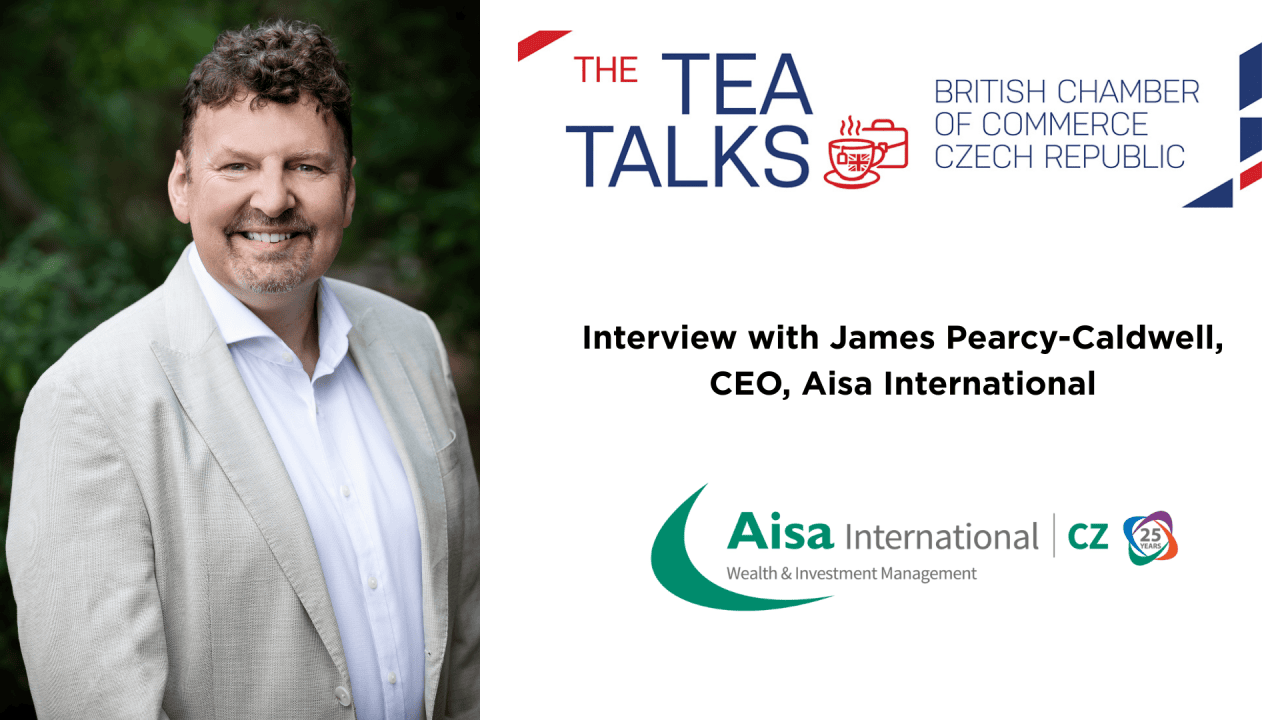
James Pearcy-Caldwell began his career as an Air Force pilot and instructor before transitioning into finance, becoming a Chartered and Certified Financial Planner.
He went on to found multiple regulated firms across the UK and EU, including the award-winning Aisa Group.
Now based in Prague, he drives fintech innovation by combining entrepreneurship with behavioural science to improve financial decision-making. He believes progress demands self-belief, courage, and acting despite doubt.
Aisa International provides transparent, ethical financial advice and investment management for clients whose lives span borders. Regulated in the EU, UK, and US, Aisa combines global expertise with a personal, human approach to finance. The firm is redefining cross-border wealth management through clarity, independence, and trust.
1. What inspired you to start Aisa International, and what gaps in the financial services industry were you aiming to fill?
“I started Aisa International to challenge a system that rewarded sales over service. Having lived and worked internationally, I saw that expats needed clarity, not complexity. My goal was to build a firm defined by transparency, ethics, and independent thinking, proving that intelligent, cross-border investment advice can be both human and accessible.”
2. You’ve built Aisa into a cross-border, multi-licensed firm. Was that structure part of your original vision or something that developed over time?
“It evolved naturally. The original plan was UK-focused, but our clients moved internationally, and we followed. To serve them properly, we needed licences under the FCA, MiFID, IDD, and SEC. Each new regulation refined the model rather than changing the vision.”
“I wanted to prove that intelligent, cross-border investment advice can be both human and accessible.”
3. As a British founder, what brought you to Prague?
“I moved to Prague out of a sense of adventure after years of international travel; first as an Air Force pilot, then as a businessman. I wanted to live outside the UK while still being connected to Europe. Prague offered culture, stability, and the freedom to build something international in a city that welcomes innovation.”
4. How has living and working here shaped your perspective as both a business leader and someone advising international clients?
“Living in Prague changes your perspective. As an expat, you see the world differently, beyond one country’s norms. Immersing yourself in a new culture and language forces you to embrace “different.” It broadens your understanding of human behaviour, aspiration, and how people make decisions. That global, questioning outlook has shaped both how I lead and work – recognising that we all view the world from a different perspective.”
5. What sets your investment management team apart in terms of experience, qualifications, or approach?
“Our team combines Chartered and CFA-level qualifications with decades of experience managing EU-, UK-, and US-regulated portfolios. We apply behavioural finance principles and evidence-based asset allocation. Importantly, we’re one of the few privately owned international discretionary fund managers based in Czechia, giving us independence, agility, and a genuine alignment with clients rather than external shareholders.”
“Expats don’t need complexity, they need clarity.”
6. Can you explain the difference between your investment management service and your advisory model?
“Advisory focuses on planning, defining goals, risk tolerance, and structure. Investment management implements and rebalances portfolios on an ongoing basis. Advisory clients control decisions; managed clients delegate discretion within defined parameters. Both models share transparent reporting and cost clarity.”
7. How do you use technology and data analytics in your investment research, rebalancing, and client reporting?
“We built our own platform, Trove, integrating CRM, portfolio analytics, compliance, and reporting. It automates alerts, risk analysis, and cost transparency, giving advisers and clients daily visibility of their data. We’re now developing an app with built-in AI to enhance insights, automate documentation, and further personalise client communication.”
“Transparency isn’t a feature; it’s the foundation of long-term trust.”
8. What is your approach to ensuring transparency around investment performance, fees, and portfolio changes?
“All fees and performance data are visible through Trove. We provide cost breakdowns, reviews, and access to meaningful information. Clients can compare performance against agreed benchmarks. Transparency isn’t a feature; it’s the foundation of long-term trust.”
9. Are clients increasingly requesting ESG-focused portfolios? How do you incorporate those principles into your investment approach?
“While ESG gained global attention, we’ve seen little genuine demand for it in the Czech Republic. Most clients prioritise performance, diversification, and transparency over themed investing. We remain open to it in the future but our focus is on measurable outcomes and client-defined objectives.”
10. How has Aisa adapted to recent global volatility such as inflation, interest rate changes, and geopolitical uncertainty?” Markets always move, but it’s people’s emotions that cause the real damage. I’ve spent years teaching and lecturing on how fear and overconfidence distort financial decisions. At Aisa, we help clients recognise those instincts and act with discipline, not impulse. Our process is built to manage behaviour as much as portfolios. True success in volatility isn’t about predicting markets; it’s about mastering emotion.”
11. How does being regulated in the EU, UK, and US shape the way you manage cross-border portfolios?
“Most advisers understand one country and one language. Our team operates across the EU, UK, and US, three of the world’s toughest regulatory systems. That means clients benefit from a much wider framework of knowledge, experience, and compliance oversight. Whether they live in one country or move between several, we understand how to connect investment, legal rules and consider tax in one single, coherent strategy. It’s advice built for real international lives, not just local ones.”
“True success in volatility isn’t about predicting markets; it’s about mastering emotion.”
12. Can you share an example of how Aisa helped an expat client navigate complex international finances to reach their goals?
“Imagine a Czech professional who has worked overseas, say in London or New York, built pensions and savings abroad, and then returned home. Their assets sit under different tax, legal, and regulatory systems and most local advisers can’t help. That’s where we’re different. Because we’re regulated in the EU, UK, and US, we can connect all those pieces into one coherent, compliant strategy. It’s advice built for people whose lives cross borders.”
13. Why do you think “financial advisory” still carries a negative perception in the Czech Republic, and what are you doing to change that?
“When I first moved here, friends told me not to mention I worked in financial or investment planning, it was seen as product sales for personal gain rather than client benefit. I’ve always believed the opposite: good advice should be quiet, transparent, and rooted in trust. We charge clear fees, take no hidden commissions, and only charge when we add real value. Over time, that honesty is reshaping how advice is viewed here, just as it is a recognised Chartered profession in the UK and the US, of which I remain a member.”
“Our advice is built for people whose lives cross borders, connecting investment, legal rules, and tax into one coherent strategy.”
14. The Czech market still leans toward commission-based advice. What are the key challenges and benefits of using a fee-based model here?
“People love the word “free”, but in finance, it’s an illusion. The cost always hides somewhere: in commissions, inflated fees, or reckless risk-taking when markets fall. Our role is to educate clients about that reality, even if some still prefer the illusion. The truth is, hidden commissions sold under the banner of “free” steadily erode returns. Firms and advisers promoting this model often push greater risk or trading to compensate. It’s a cycle where only those selling “free” advice win, rarely the clients, and that’s a cycle we refuse to be part of.”
15. Looking ahead, how do you see investment management evolving for Aisa and for the industry more broadly?
“The future of investment management isn’t just about technology, or AI; it’s about understanding people. Behavioural insight, AI, real people and real-time data will work together to help clients make better, calmer decisions. For Aisa, that means expanding Trove’s AI capabilities, integrating deeper analytics, and keeping people and transparency at the core. The industry will evolve from selling products to guiding human lifestyle decisions with clarity and intelligence.”