
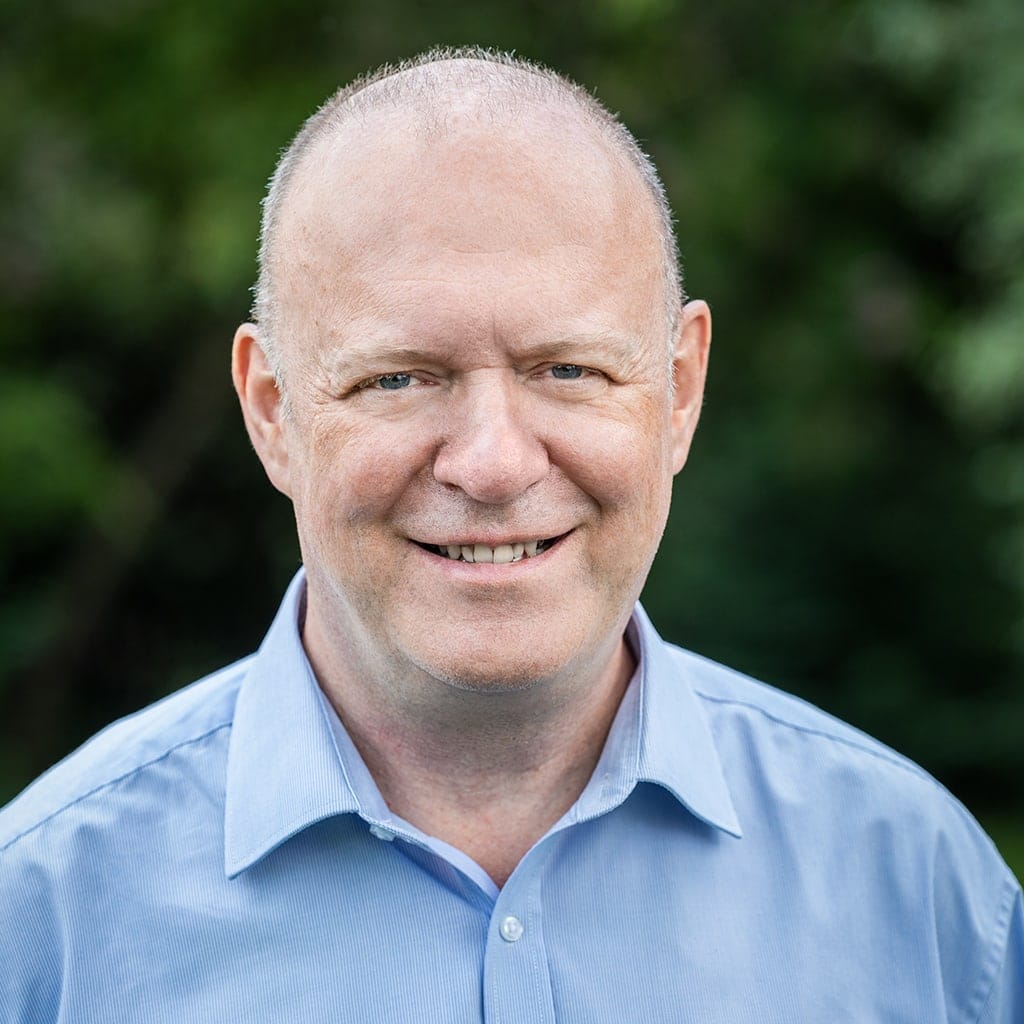
Christopher Lean, Chief Investment Officer and holder of the highest European and British qualifications (Chartered Financial Planner, EFP), is the visionary behind Aisa International’s investment strategy. In this interview, Monika Škubalová (Compliance Officer) speaks with Chris, who reveals how to build resilient portfolios, navigate inflation, and what the commitment to uncompromising ethics means for the client.
1. The Long-Term Horizon and Structural Growth
How does our CIO view the next decade? Chris Lean, who has been in the industry since 1988, approaches global markets with cautious optimism. He emphasizes that clients must abandon the illusion of easy growth seen in the past decade.
When asked about his long-term outlook for global markets over the next 5–10 years and the most underestimated risks, Chris stated: “I’m reasonably optimistic. I believe there is good potential for positive returns, especially for investors who are disciplined and diversified. I don’t expect a repeat of the high-growth 2010s.”
He highlights that while meaningful headwinds and structural risks persist, the likely winners will be those who identify structural growth areas, such as technology, energy transition, and infrastructure. Conversely, clients often underestimate the idea of inertia, failing to anticipate the political and geopolitical shocks that demand continuous vigilance.
2. Portfolio Resilience Against Inflation and Liquidity
High inflation remains a major threat to pension and investment clients. Our philosophy requires a specific approach to asset allocation, which Chris explains in the context of alternative investments.
Describing Aisa’s approach to building a portfolio resilient to inflationary pressures, Chris confirmed their strategy focuses on combining assets that are either positively correlated or insensitive to inflation. He elaborated on the firm’s strict liquidity requirements: “Our portfolios do invest in clean, transparent and low cost funds and we do not use alternative investments; everything must be liquid and easily tradable. We gain exposure to commodities via ETFs and commodity producers, not through opaque, illiquid alternatives.”
This emphasis on transparency and liquidity is key to maintaining the independent and objective investment strategy governed by our Investment Committee (IIC).
Why Pension Systems are Under Pressure
Addressing the structural stress on global pension systems due to aging populations, Chris gave simple advice to young professionals: “Most global pension systems are under significant strain. They are designed for a 20th-century workforce and lifespan but struggle to meet 21st-century realities. Future retirees will need to rely more on personal savings and investment discipline.”
“Most global pension systems are under significant strain. They are designed for a 20th-century workforce and lifespan but struggle to meet 21st-century realities. Future retirees will need to rely more on personal savings and investment discipline.”
3. The Ethical Foundation: Chartered Status and RDR
Clients should insist on the highest qualifications, as they demonstrate knowledge, experience, and ethical commitment. Chris holds the Chartered Financial Planner and European Financial Planner (EFP) statuses—the highest level of financial planning in the UK and EU.
Commenting on how the British emphasis on regulation (like the RDR – Retail Distribution Review) translates into Aisa’s international advisory philosophy, Chris noted that the reform transformed financial advice from a sales function into a true profession: “The Retail Distribution Review (RDR) in 2013 fundamentally reshaped how financial advice is delivered and paid for. We apply the same principles of RDR to any advice we provide within the EU: fee transparency (clients pay explicitly, removing product bias) and high advisor qualifications.”
4. The Future of Advice: The Human Factor and AI
Having witnessed the industry’s transformation since 1988, Chris views AI as an ally, not a replacement.
Regarding how digitisation and AI have changed the financial advisor’s role, Chris believes the key task for an advisor five years from now remains essentially human: “AI is already making a difference; it helps advisers provide more time to their clients as a lot of the more bureaucratic parts of the job can be dealt with much faster than before.”
However, the core service remains irreplaceable: “Investors seek emotional stability and context, not just analytics. AI cannot yet replicate the empathy, reassurance, and perspective that define a good financial planner. I believe advisers will need to act more as translators between AI systems and their human clients and warn investors about blind reliance on automation.”
5. Unbreakable Principles
Chris concludes by summarising his personal investment philosophy with a timeless quote from Benjamin Graham: “Benjamin Graham wrote, ‘The investor’s chief problem — and even his worst enemy — is likely to be himself.’”
His two most important principles are:
- Timing the market is forbidden: “Never try and time the market or let your clients push you to time the market.”
- Volatility is not risk: “Volatility is not risk. Market fluctuations are the price of investing for the long term. Time is a great asset; staying in the market delivers the best returns—ignore the noise!”
Leaders and mentors in the investment world must pass on one crucial skill: adaptability and the ability to separate personal emotions from professional judgment. “I point out that we cannot predict the future, that we need to be adaptable to changes and I invite as many opinions as possible,” Chris adds.